ServicesWater Extraction
Water Extraction in East Highland Park
When a pipe lets go or a basement takes on water, every hour lets it soak deeper into floors, plaster and framing. We pull the water out with truck-mounted and portable extractors, check what it reached, and leave your home ready to dry.
Getting the water out before it settles in
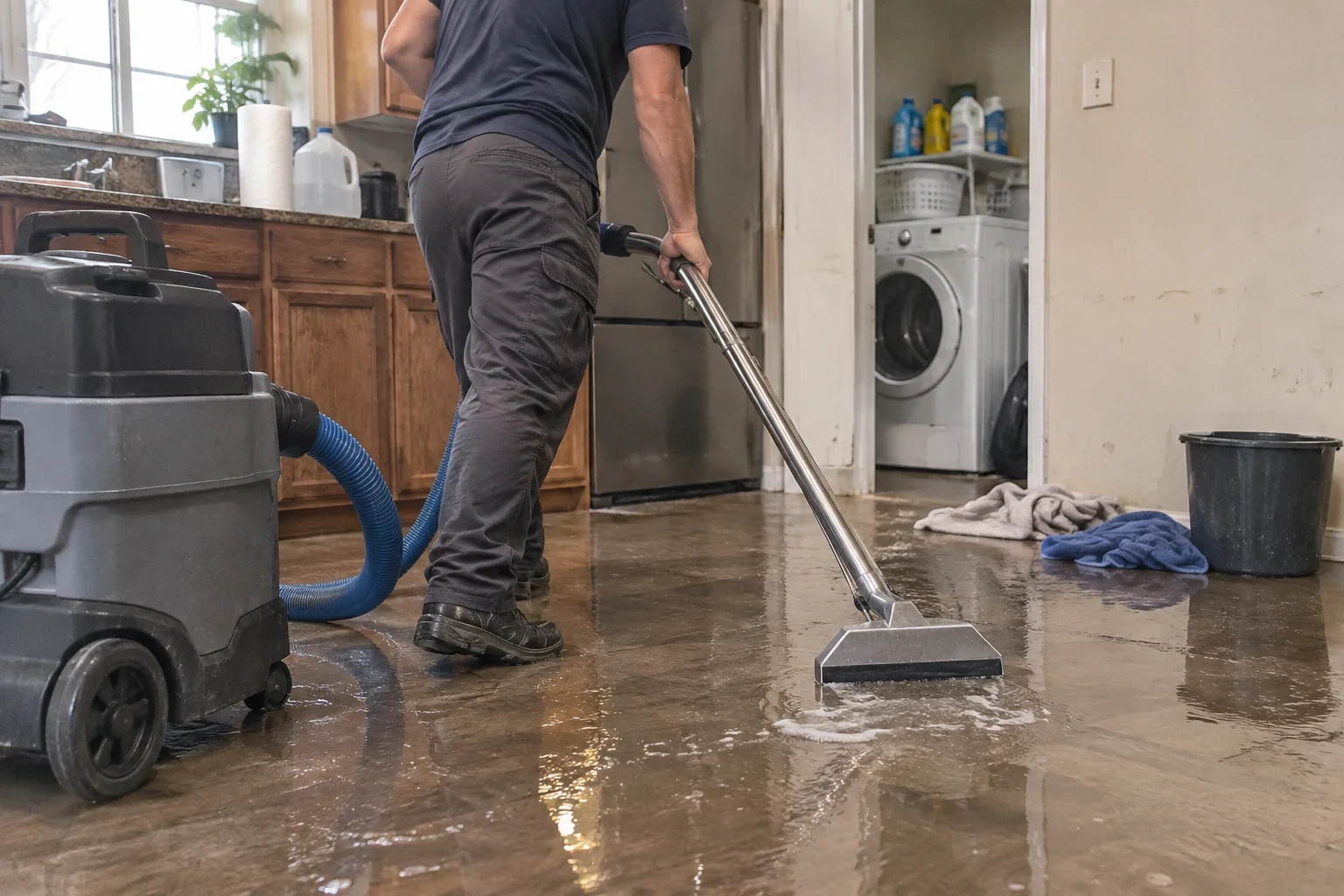
Water extraction is the first step after a leak, burst line or overflow. Standing water comes out with pumps and wands. Water held in carpet, pad and subfloor comes out with weighted extraction tools that press down and pull up at once. Removing liquid water this way is far faster than waiting for fans and dehumidifiers to evaporate it.
Older houses hold water in places a newer build does not. Plank hardwood laid over board sheathing, plaster on wood lath, vinyl laid over an original floor, and patchwork from past repairs all trap moisture in layers. We look for those layers before we start, so we know where the water is hiding and how to reach it without tearing out more than we need to.
For active damage we are on site in 60 mins or less, and we answer calls day and night. Once the water is out, the job moves to drying and dehumidifying, which we also handle.
What our water extraction includes
Stopping the source
We help you shut off the water and, when needed, the power to affected rooms. In a house that has been remodeled a few times, that can mean finding a stiff gate valve or a main that was moved years ago.
Standing water removal
Submersible pumps and truck-mounted units clear basements, crawlspaces and flooded rooms. Hoses run out of the house, so there is no bucket brigade across your floors.
Carpet and pad extraction
Weighted tools pull water from deep in the carpet and pad. We tell you plainly whether the pad can stay or has to go, since soaked pad often cannot be saved.
Moisture mapping
Meters and a thermal camera show where water traveled under flooring, behind baseboards and into wall cavities. We photograph what we find so you have a record.
Protecting what is dry
Furniture is lifted onto blocks or moved, floors along the work path are covered, and valuables are set aside in a dry room.
A clear handoff to drying
You get a written summary of affected areas and readings, which carries straight into the drying plan and any insurance claim.
Signs you need water extraction now
Water you can see or hear
Pooled water, a squish underfoot, or a drip you can hear inside a ceiling all mean liquid water is present. Fans alone will not move it fast enough.
Cupping or lifting floorboards
Hardwood that crowns at the edges is drawing water from below. Solid plank floors react quickly, and early extraction often saves them.
Soft or stained plaster
Plaster that bulges, flakes or shows a tide line is holding water behind its surface. Lath behind it can stay wet for a long time.
A wet basement or crawlspace
After heavy summer storms, low spaces under a house can collect inches of water that never drains on its own.
A musty smell that came on fast
A sudden damp odor points to hidden water. It is the step before mold, which we treat separately under mold remediation.
How an extraction visit runs
- 1
Walk-through and readings
We walk the affected rooms with you, take moisture readings and look for the quirks of an older house, such as layered flooring or old patch work. You hear what we found before any work starts.
- 2
Protect and prepare
We cover the path in and out, move contents and set up equipment where it will not block doors or stairs.
- 3
Extract
Pumps clear standing water first, then carpet, pad and hard surfaces are extracted pass by pass. Where water is trapped under a top layer of flooring, we explain the options before removing anything.
- 4
Measure again and plan drying
We re-read the moisture levels, mark the wet zones and set the drying equipment. You know what comes next and roughly how long it will run.
What shapes the cost of extraction
Extraction is priced on the water itself and the house it is in. After the walk-through we give you a written, line-item estimate, so you see what each part of the work is before it begins. When a claim is part of the picture, our readings and photos give your insurer a clear record, and we work with most major insurance companies. The coverage decision itself stays with your adjuster.
- How much area is wet
- Square footage and how many rooms the water reached matter most. Water that ran under walls into a second room adds time.
- What the water soaked into
- Carpet and pad, hardwood, tile and finished basements each take different tools and passes. Layered flooring from past remodels can add steps.
- Water category
- Clean water from a supply line is handled differently from groundwater or anything contaminated. Sewage backups follow our sewage cleanup process.
- Access
- Tight crawlspaces, steep basement stairs and crowded rooms take longer to reach and set up.
- Timing
- Night and weekend response is available. Calling early usually keeps the scope smaller, since water spreads the longer it sits.
Water extraction questions
Something not covered here? (804) 312-5226
Can my hardwood floors be saved?
Often, yes, if water is pulled out quickly and the boards dry slowly and evenly. Solid plank floors from earlier decades tend to recover better than engineered flooring. We take readings and tell you honestly whether drying in place makes sense or whether boards need to come up.
Do you have to tear out my carpet?
Not always. Carpet soaked by clean water can usually be extracted and dried in place. The pad underneath is a different story and often has to be replaced, and anything soaked by contaminated water should be removed.
How long does extraction take?
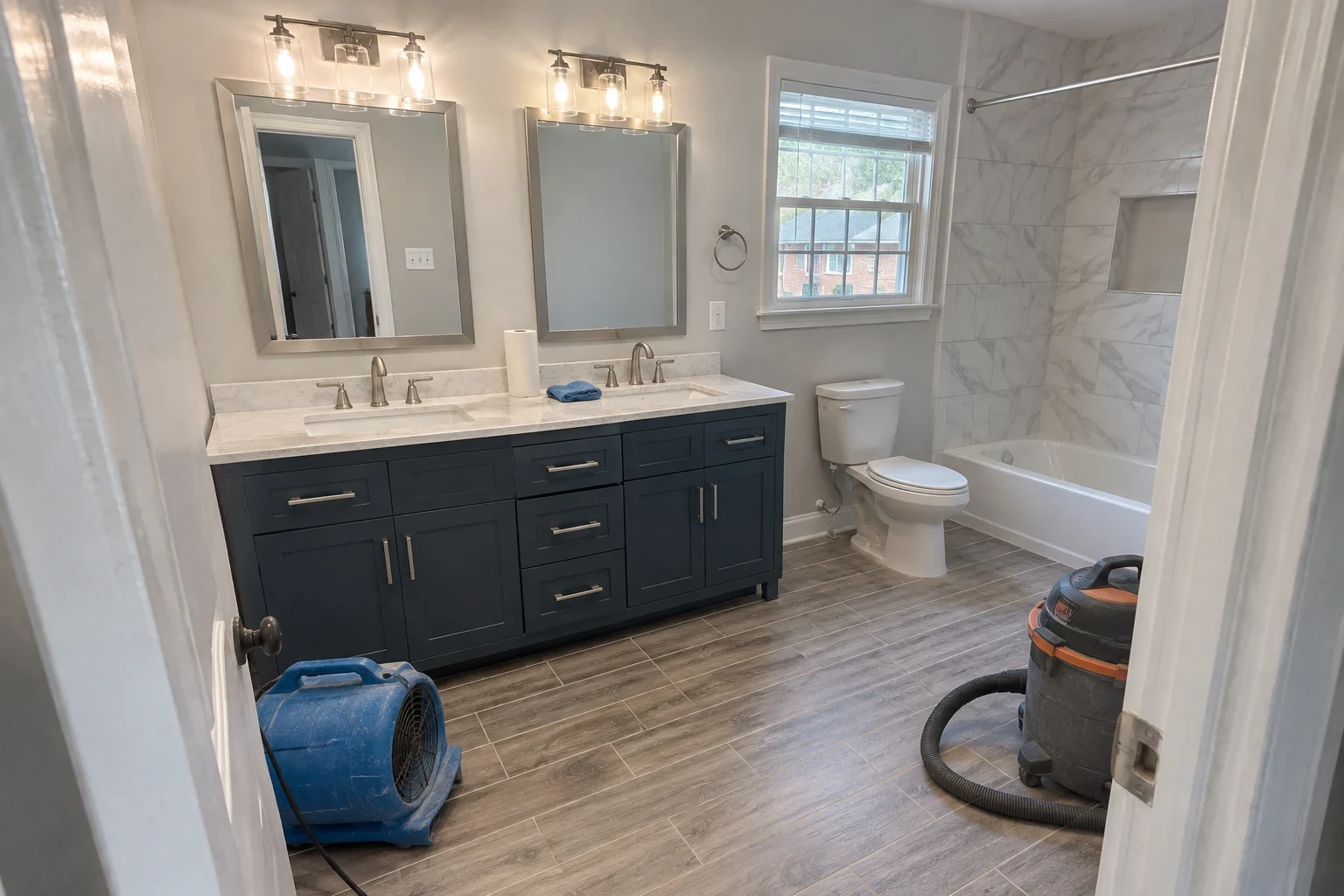
Most extraction work is done in a single visit, usually a few hours depending on how much water there is and where it reached. Drying afterward takes several days with fans and dehumidifiers running.
Will you find water I cannot see?
That is the point of moisture mapping. Older homes have cavities, double floors and past repairs where water hides. We use meters and thermal imaging to trace it and show you photos of what we found.
Should I start mopping or running fans before you arrive?
If it is safe, shut off the water and move small valuables out of the wet area. Stay clear of any room where water may be near outlets or appliances. Fans on a soaked floor mostly spread humidity, so it is better to wait for extraction first.
Get the water out before it spreads
We come out day or night, walk the damage with you and give you a clear plan for extraction and drying. The inspection costs nothing.