ServicesMold Remediation
Mold Remediation in East Highland Park
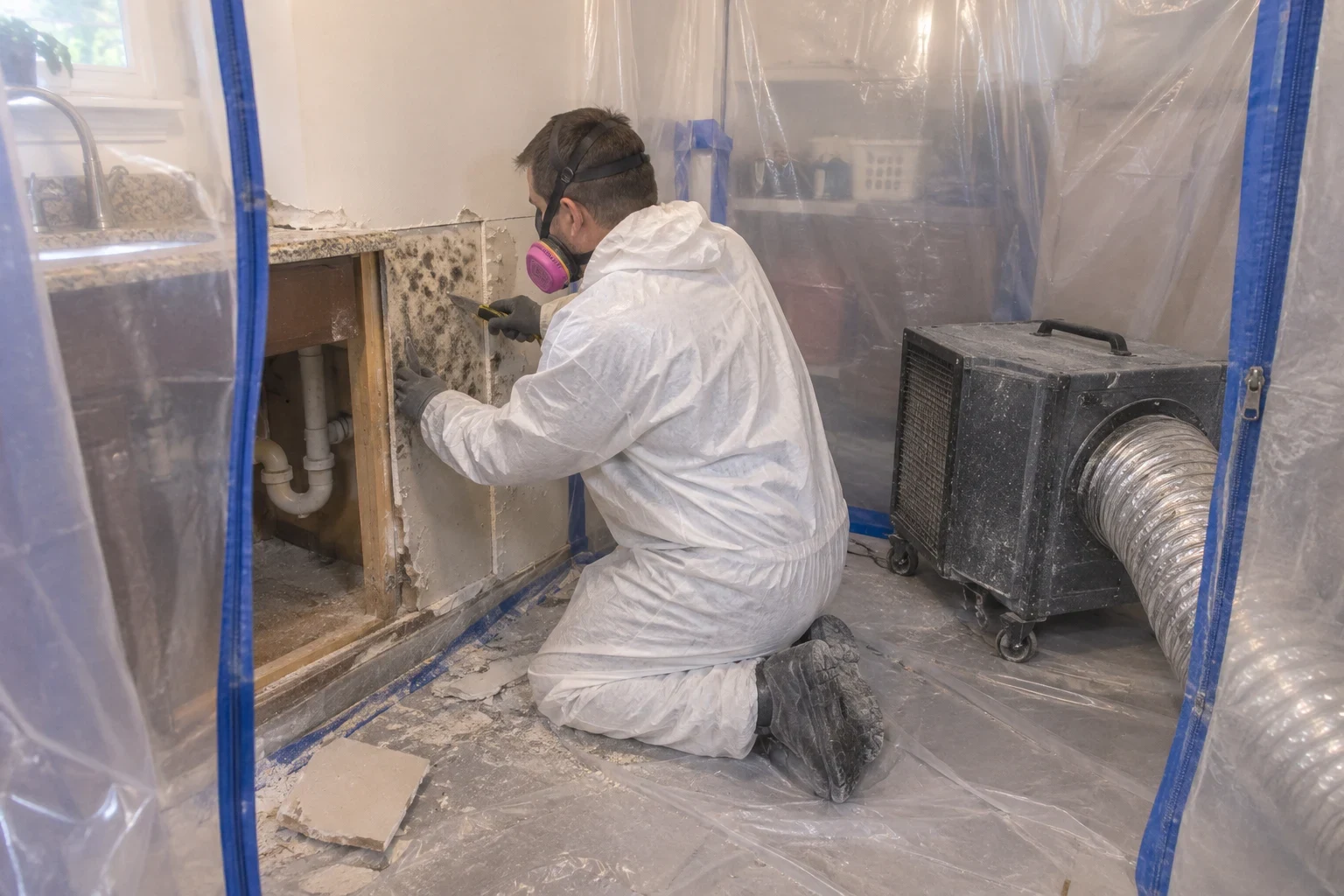
Mold is almost always a moisture problem first. We trace where the water is coming from, seal off the affected rooms, remove what cannot be saved and clean what can. You get a clear account of what we found before any work begins.
Removing mold and the reason it grew
Mold needs three things: a surface to feed on, warmth and steady moisture. Drywall paper, wood framing, carpet pad and fiberglass insulation are all good food sources, so the real work is finding the moisture and taking it away. Scrubbing a visible patch without doing that only buys a few months.
Older houses add their own layers. A stain may sit behind a newer coat of paint from a past repair, a slow drip may come from a galvanized supply line or cast iron drain, and a crawl space may have no vapor barrier at all. We look past the obvious spot and check the walls, floors and framing around it with moisture meters and thermal imaging.
If the area is still wet when we arrive, our drying and dehumidifying work comes first. Once the space is dry and clean, our repairs and rebuild crew can put back the walls and finishes.
What our mold remediation covers
Moisture source investigation
We follow the water to its origin, whether that is a leaking pipe, a failed window flashing, a bath fan venting into the attic or ground moisture in a crawl space. Photos of what we find go to you.
Containment and air filtration
Plastic sheeting walls off the work area, and HEPA air scrubbers pull air out of it so the space stays at slightly lower pressure than the rest of your home. Airborne spores are drawn into the filters instead of drifting toward bedrooms and living spaces.
Removal of damaged materials
Porous materials that mold has grown into, such as drywall, insulation and carpet pad, are cut out and bagged inside the containment. We remove only what needs to go and mark the cut lines so the rebuild is clean.
Cleaning of framing and hard surfaces
Studs, joists and subfloor are HEPA vacuumed, cleaned and, where growth has set into the grain, sanded back. Old plaster and lath are assessed piece by piece, since some of it can be cleaned and kept.
Final check before rebuild
We confirm the materials are dry and the surfaces are clean before the containment comes down. You see the open cavity before anything is closed up.
Signs it is time for a mold inspection
- A musty smell that keeps returning
- A damp, earthy odor that lingers near a sink cabinet, a basement corner or the back of a closet is often the first clue, well before anything shows on the surface. It usually grows stronger after a rainy stretch or when the air conditioning has been off.
- Stains that come back after painting
- If a ceiling or wall spot bleeds through fresh paint, the moisture behind it never went away. This is common where an earlier repair covered the symptom.
- Spotting on wood in the crawl space or attic
- Dark speckling on joists, rafters or roof sheathing usually points to poor ventilation or a vent dumping humid air in the wrong place.
- Soft or warped trim and flooring
- Baseboards that pull away from the wall or hardwood that cups near a bathroom suggest a slow leak feeding the materials underneath.
- Mold after a recent leak or flood
- Visible growth can appear within days of water damage that was not fully dried. The sooner it is handled, the less material has to be removed.
How a mold remediation job runs
- 1
Free on-site inspection
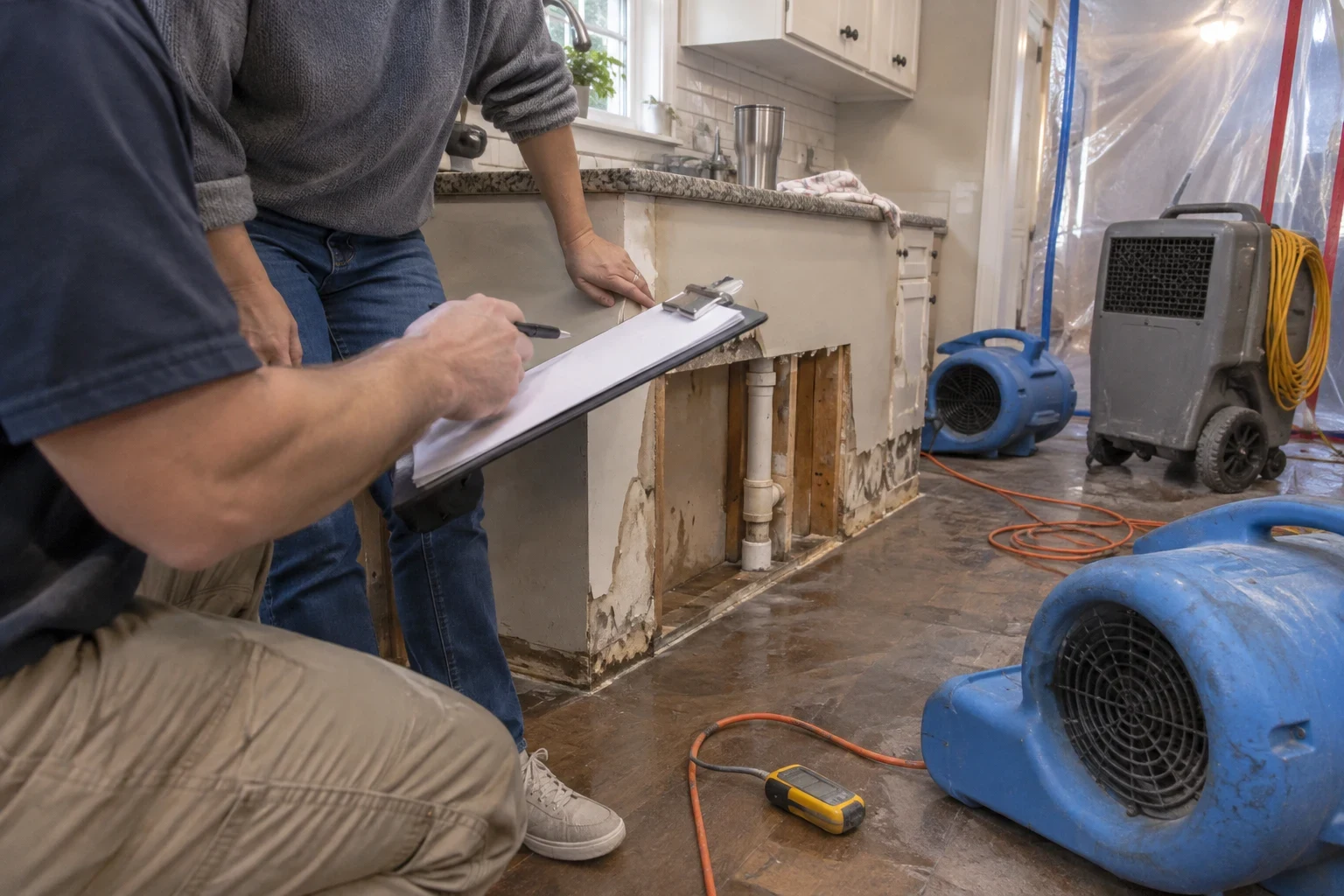
We walk the affected area with you, take moisture readings and photograph what we find. You get a plain explanation of the cause and the scope we recommend.
- 2
Written scope and plan
Before work starts, we lay out which rooms will be contained, what will be removed and what can be cleaned. If insurance may be involved, we explain what the adjuster will want to see.
- 3
Containment and removal
We protect floors and the path through your home, build the containment and start the air scrubbers. Damaged materials come out in sealed bags, and the source repair is handled or arranged.
- 4
Cleaning, drying and clearance
Surfaces are HEPA vacuumed and cleaned, then dried to normal moisture levels. We walk the space with you again before the plastic comes down, and the area is ready for rebuild.
What affects the cost of mold remediation
Every job is priced from what we find at the inspection, and you see the scope before anything begins. The biggest variables are how far the growth has spread and what it has grown into. Hidden damage in older walls can change the picture, so we show you photos before adjusting any plan.
- Size of the affected area
- A single closet wall is a very different job from a full basement. Larger areas need more containment, more air filtration and more time.
- Materials involved
- Drywall is quick to cut out and replace. Plaster and lath, original hardwood and built-in cabinetry take more care to protect or clean.
- Access
- Crawl spaces, attics and tight wall cavities slow the work and sometimes need extra protective setup.
- Fixing the moisture source
- A loose drain fitting is a small repair. A failed supply line, missing vapor barrier or misrouted bath fan adds to the scope.
- Insurance coverage
- Whether a policy covers mold usually depends on what caused it. We work with most major insurance companies and can document the damage clearly for your claim.
Mold remediation questions
- Can I just clean the mold with bleach?
- Bleach can lighten the color on a hard surface, but it does not reach growth inside drywall or wood, and the water in it adds moisture. It also does nothing about the leak or humidity feeding the mold. For a small spot on tile you may be fine on your own, but anything larger or recurring is worth an inspection.
- Do we need to leave the house during the work?
- Usually not. Containment and negative air keep the work area separated from the rest of your home. If the affected area is near bedrooms or someone in the house has breathing concerns, we will talk through the options at the inspection.
- How quickly can you get here?
- We offer emergency water damage response, and we are on site in 60 mins or less. If active water is behind the mold, stopping and drying it comes first.
- Will the mold come back?
- Mold returns when moisture returns. That is why we spend so much time on the source, especially in older houses where a past repair or aging pipe is often the real cause. Once the cause is fixed and the area is dry, regrowth is far less likely.
- Does homeowners insurance pay for mold removal?
- It depends on your policy and on what caused the mold. Sudden water damage, such as a burst pipe, is more often covered than long-term seepage. We are not the adjuster, but we provide photos, moisture readings and a clear scope to support your claim.
Have a musty room or a stain that will not stay painted
We will find the moisture, show you what we see and explain the work before it starts. The inspection is free, and you will know the scope before we lift a tool.