ServicesFlood Cleanup
Flood Cleanup in East Highland Park
When storm water or rising groundwater gets inside, we clear out what can't be saved, clean what can and sanitize the rest. In older houses that means checking behind plaster, under layered floors and inside crawl spaces, where floodwater tends to hide long after the surface looks dry.
What flood cleanup covers
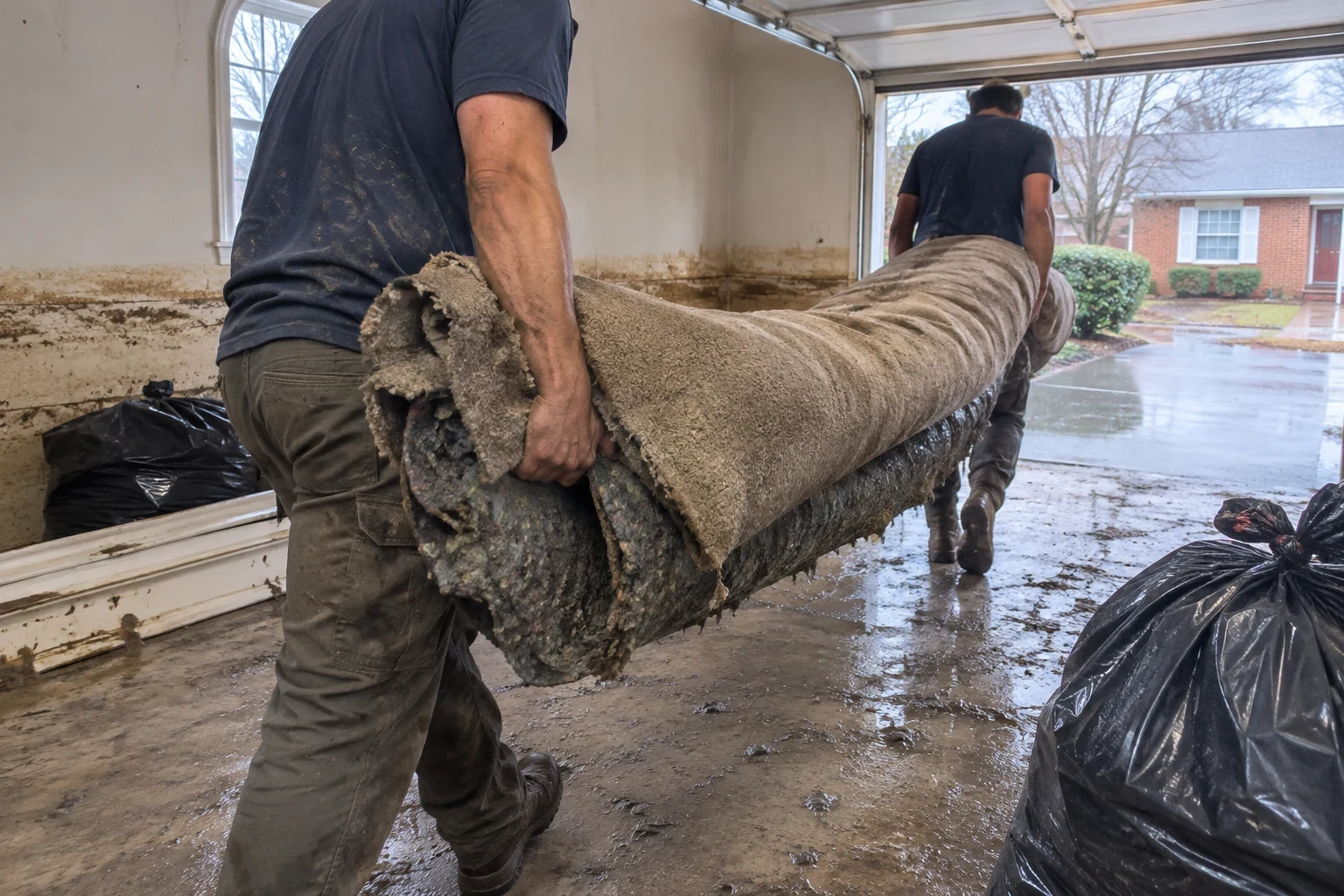
Flood cleanup is the work that follows outside water coming into your home: a heavy storm overwhelming the yard drainage, a creek rising or groundwater pushing up through a basement slab. That water picks up soil, lawn chemicals and sometimes sewage on the way in, so it is treated as contaminated. Soaked carpet, pad and lower drywall usually have to go. Solid wood, masonry and many belongings can be cleaned and kept.
Older houses add a layer of care. Plaster over wood lath holds water differently than drywall, original hardwood often sits under one or two later floors, and past repairs can hide a soaked cavity behind a fresh patch. We look for those details before we remove anything, so you keep the original materials worth keeping.
If standing water is still in the house, we start with water extraction. Once the cleanup is done, drying and dehumidifying follows, and repairs and rebuild puts the rooms back together.
What the work includes
- Removing water and silt
- We pump out standing water and shovel or vacuum the mud and silt floodwater leaves behind. Silt carries bacteria, so it comes out before any cleaning starts.
- Careful tear-out
- We cut wet drywall above the waterline, pull soaked carpet and pad and remove insulation that has wicked water. Plaster, trim and original hardwood are assessed piece by piece rather than removed by default.
- Cleaning and sanitizing
- Remaining surfaces are washed and treated with an antimicrobial suited to the material. Framing, joists, concrete and masonry get the same attention as the visible rooms.
- Contents sorting
- We help you separate belongings that can be cleaned from those that can't, and we photograph discarded items so you have a record for your insurer.
- Crawl space and basement checks
- Many older homes sit over crawl spaces with little or no vapor barrier. We inspect the subfloor, sill plates and ductwork down there, because flood damage under the house is easy to miss from upstairs.
Signs you need flood cleanup
A visible waterline
A tide mark on walls, baseboards or furniture tells you how high the water rose. Anything porous below that line has likely absorbed contaminated water.
Mud or silt on the floor
A film of grit after the water drops means the flood came from outside. That residue needs removal and sanitizing, not just a mop.
Musty smell days later
A damp, earthy odor that won't fade often points to water trapped behind plaster, under subflooring or in a crawl space. Left alone, it can lead to mold remediation work.
Floors that cup or feel soft
Hardwood that crowns or buckles, or a floor that gives underfoot, usually means water reached the subfloor or the layers beneath a newer covering.
Water in the crawl space or basement
Even if the living areas stayed dry, standing water under the house soaks insulation, wood framing and ducts.
How a flood cleanup job runs
- 1
Your call and our arrival
Flood calls are answered around the clock, and our goal is to be on site in 60 mins or less. We check for safety first and ask that power stay off to any flooded areas until an electrician has looked, especially where older wiring is present.
- 2
Free on-site inspection
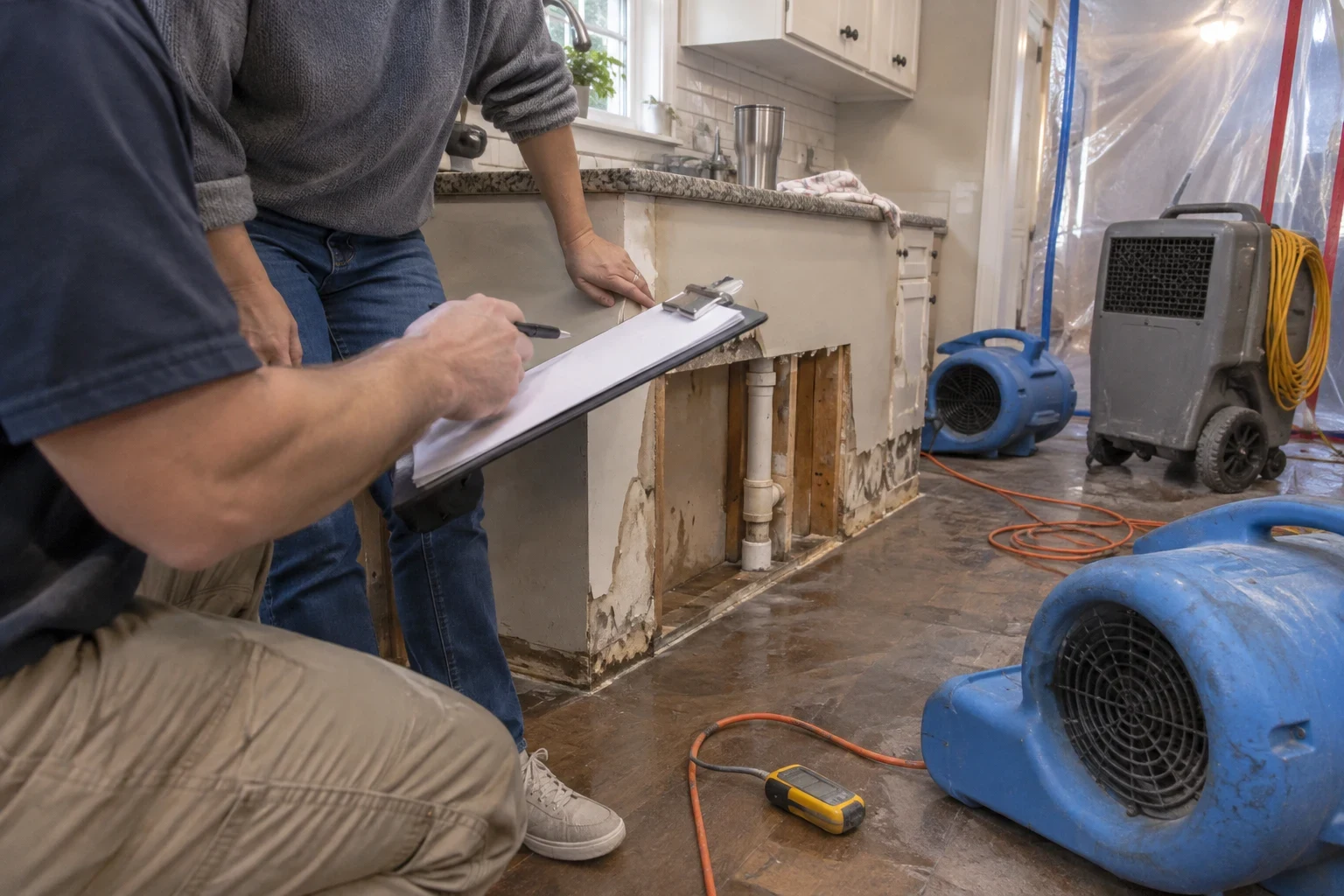
We walk the house with moisture meters, take photos and explain what we found. You get a clear account of what needs removing and what can be cleaned, before work begins.
- 3
Protection and removal
We lay down floor protection in unaffected rooms, set up containment where needed and remove water, silt and damaged materials. Original trim and doors we plan to keep are labeled and set aside.
- 4
Cleaning and sanitizing
Every exposed surface is cleaned and treated. We check the cavities behind past repairs and between old and new flooring layers so nothing wet is closed back in.
- 5
Handoff to drying
Air movers and dehumidifiers go in, and we monitor readings until the materials reach a dry standard. You get our notes and photos for your records and your claim.
What affects the cost of flood cleanup
We price each flood from what the inspection turns up, and we go over every line item with you before any work begins. The two biggest drivers are how far the water traveled and which materials it reached. On the insurance side, we work with most major insurance companies, and the photos and moisture readings we take give your adjuster a clear record to review.
- Area and water height
- A few inches of water in one room is a smaller job than water standing two feet up the walls across an entire floor.
- Materials affected
- Carpet and drywall come out quickly. Plaster and lath, original hardwood and floors laid over older floors take longer, because we assess them before deciding what to save.
- Access to hidden spaces
- Low crawl spaces, finished basements and paneled walls add time, since each has to be opened and checked by hand.
- Contents and debris volume
- How much furniture, stored belongings and silt has to be moved or hauled away shapes both labor and disposal.
Flood cleanup questions
Something not covered here? (804) 312-5226
Can I clean up flood water myself?
Moving belongings to a dry room and photographing everything are good first steps. Floodwater counts as contaminated, though, and it soaks into wall cavities and subfloors you can't see from the room. We suggest a professional inspection before you pull anything out or set up fans.
Will my original plaster walls have to come out?
Not always. Plaster over lath often comes through a short flood if it is cleaned and dried properly. We check it with meters and remove only the sections that are soft, pulling away from the lath or holding moisture that won't release.
Does homeowners insurance cover flood cleanup?
Many standard homeowners policies leave out water that enters from outside, and a separate flood policy may pick it up. We work with most major insurance companies. During the inspection we log moisture readings room by room and photograph each damaged area, which gives your adjuster a clear record to review. Whether the claim is approved is your insurer's decision.
How long does flood cleanup take?
Removal and sanitizing usually take a day or two for a single level. Drying then runs several more days, depending on the materials and the weather. After the inspection we give you a realistic schedule.
Can we stay in the house while you work?
In most cases, yes, as long as the damage is limited to an area we can close off. Things change if floodwater carried sewage into living spaces or the power needs to stay off. In that situation we'll say so directly and recommend staying somewhere else for part of the job.
Get the water out and the house checked
We'll come out, look behind the obvious and tell you what your home needs. The inspection is free, and flood calls are answered day or night.