ServicesDrying and Dehumidifying
Drying and Dehumidifying in East Highland Park
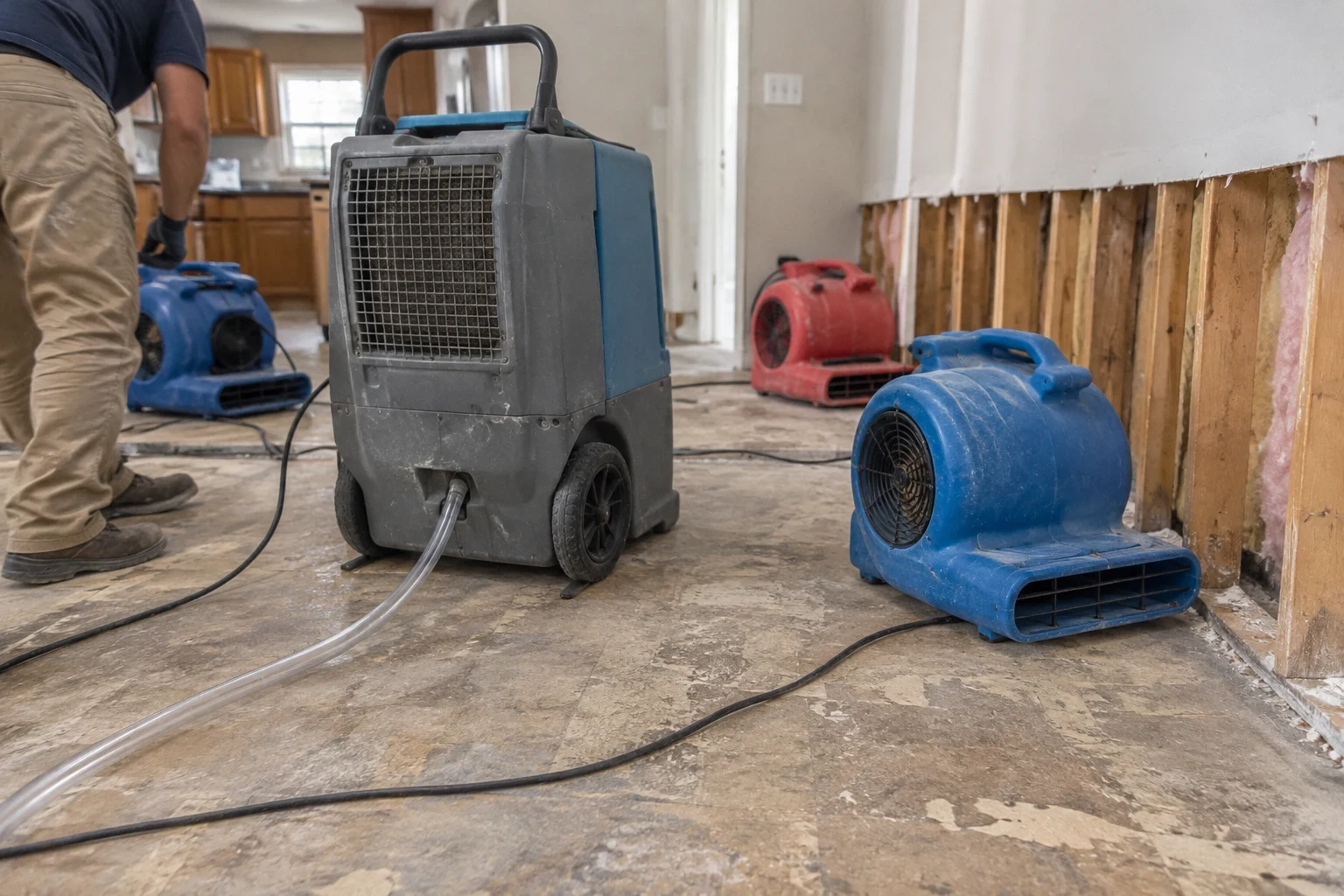
Water pumped off the floor still lingers inside plaster, hardwood and framing. We place air movers and dehumidifiers, take moisture readings every day and stay with it until each material measures dry, so no wall or floor in your home gets closed up wet.
Drying the parts of your home you cannot see
Water travels further than it looks. It wicks up drywall and plaster, settles under floor finishes and soaks into the sill plates and joists below. A room can feel dry to the touch within a day while the wood underneath is still holding enough moisture to cup a floor or feed mold. Drying and dehumidifying is the controlled process of pulling that hidden moisture out and confirming it is gone.
Older houses make this more careful work. Plaster on wood lath holds water longer than modern drywall. Old-growth oak flooring reacts differently than engineered planks. Past repairs, such as drywall patched over original plaster or a newer subfloor laid over an older one, can trap water in layers. We open what needs opening, leave sound original material in place where it can be dried, and tell you plainly which is which.
If water is still standing, our water extraction service comes first. Drying follows the same visit when we can start right away.
What our drying work includes
- Moisture mapping
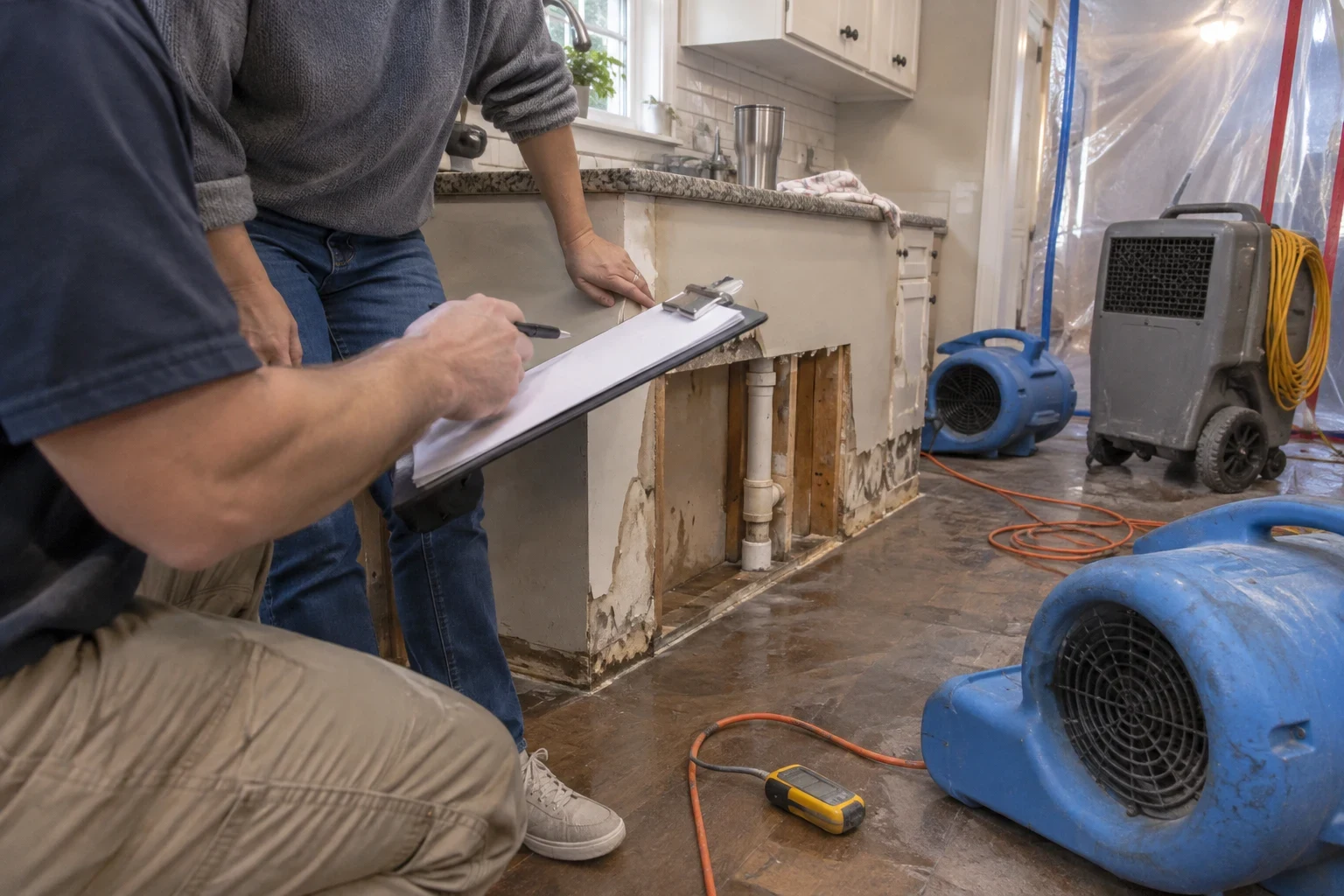
- We use pin and pinless meters along with thermal imaging to find where water has spread in walls, floors and ceilings. Readings are taken against a dry reference spot in your home, so we know the true target for each material.
- Air movers and dehumidifiers
- Equipment is placed to move air across wet surfaces and pull moisture out of the room. We size the dehumidifiers to the space so the air keeps drawing water out of the materials instead of pushing it around.
- Targeted drying for walls and floors
- Where plaster or drywall holds water in the cavity, we may drill small holes near the baseboard to vent it. Hardwood floors can be dried in place with floor mats when the boards are still sound.
- Crawlspace and subfloor attention
- Many older homes sit over crawlspaces where water collects unseen. We check the joists and subfloor from below and dry that space too, since damp framing there keeps the rooms above humid.
- Daily readings and a written log
- Each visit we record moisture levels and adjust the setup. You get a record of where things started and where they finished, which is useful for an insurance claim.
Signs your home needs professional drying
A musty smell that lingers
An earthy odor a few days after a leak usually means moisture is still trapped in a wall cavity or under the floor.
Floorboards cupping or lifting
When the edges of hardwood boards rise above the centers, the wood is absorbing water from below. Caught early, many floors flatten again with proper drying.
Bubbling paint or soft plaster
Paint that blisters or plaster that feels soft and crumbly means water is sitting behind the surface.
Windows fogging indoors
Condensation on the inside of the glass after a leak shows the air is carrying more moisture than the house can shed on its own.
Water that came through a ceiling
Leaks from an upstairs bathroom or roof often soak insulation and joists before they show below. Those spaces rarely dry well without help.
How a drying job runs
- 1
Inspection and readings
We walk the affected area with you, take moisture readings and photograph what we find. You hear what needs drying, what may need removal and why.
- 2
Setup and protection
We place equipment, run cords safely and protect floors and furniture in the work area. If any material has to come out, we explain it before we cut.
- 3
Daily monitoring
We return each day to read the meters, move equipment where it will do more good and record progress. Most rooms take several days, and dense materials like plaster and old framing can take longer.
- 4
Confirming dry and handing off
When every material reaches its dry target, we remove the equipment and give you the final readings. If anything needs rebuilding, our repairs and rebuild work picks up from there.
What affects the cost of drying
Every drying job is priced on what it actually requires, never a flat figure. After the inspection you receive a written line-item estimate, so each part is clear before any equipment arrives. We work with most major insurance companies. If the claim steps are new to you, we walk you through how they typically unfold, while the adjuster makes the coverage decisions.
- How far the water spread
- One wet room needs less equipment and fewer days than water that ran through two floors and into the crawlspace.
- The materials involved
- Plaster, solid hardwood and older framing hold moisture longer than drywall and laminate, which adds drying days.
- Clean or contaminated water
- Water from a supply line is handled differently than water from outside or a drain. Contaminated material often has to be removed rather than dried.
- How quickly drying starts
- Water that has sat for days has soaked deeper and may have started mold growth, which adds time and steps.
Drying and dehumidifying questions
Something not covered here? (804) 312-5226
Can I just run fans and a store-bought dehumidifier?
For a small surface spill, often yes. Once water has reached wall cavities, subfloors or insulation, household equipment usually cannot pull enough moisture out fast enough. The bigger problem is that you have no way to confirm the hidden materials are dry. Our meters answer that question.
How long will the equipment be in my home?
Most drying jobs run three to five days, though older plaster and thick framing can take longer. We check progress every day and remove equipment as soon as readings show each area is dry. The machines do make steady noise, so we place them with your routines in mind.
Will you have to tear out my plaster walls?
Not always. Sound plaster on lath can often be dried in place by venting the cavity through small holes. We remove material only when it is damaged, contaminated or cannot be dried, and we show you the readings and photos behind that call.
Is it safe to stay home during drying?
In most cases, yes. Clean-water drying is quiet work apart from the equipment noise. If the water was contaminated or mold is present, we will tell you which rooms to avoid and may set up containment.
What if mold has already started?
Drying alone will not deal with active growth. If we find it during the inspection, we pair the drying plan with our mold remediation service so the affected material is handled correctly first.
Find out what is still holding water
We are on site in 60 mins or less for emergency water damage response. The inspection is free, and you will see the readings yourself before deciding anything.